Class A Malls Are Beating E-Commerce and the Dome Is Why
Look at what this building spends money on. A steel and glass dome ninety feet up. A drum of clerestory windows that lights nothing anybody needs lit. Four columns the width of a car. A marble staircase wide enough for a coronation, doing the job a pair of escalators would do for a fraction of the cost. None of it sells anything. All of it is on a maintenance schedule.
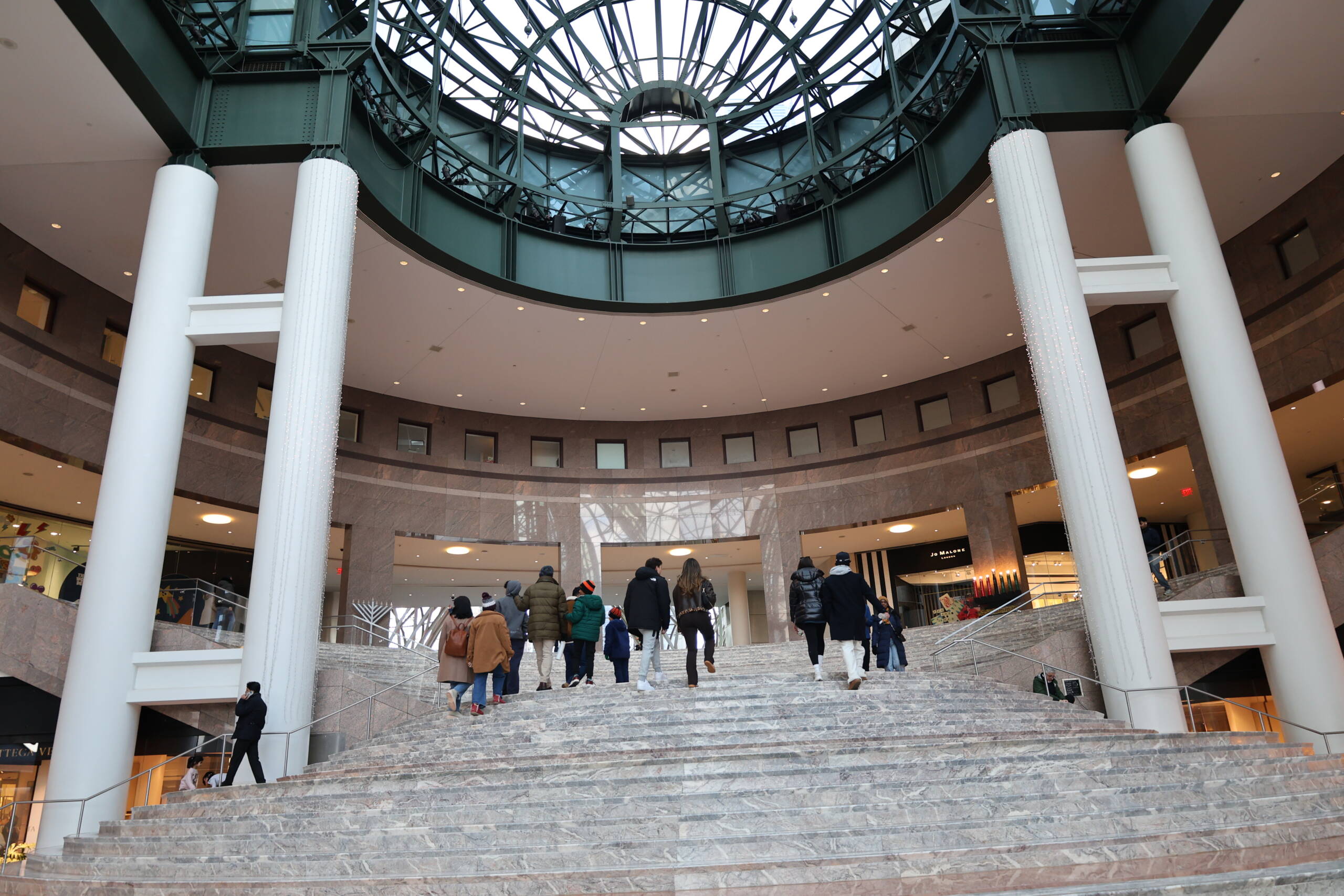
That spending is the whole business model, and the retail is downstream of it.
The American mall sector has split in two so cleanly that talking about “malls” as a category has stopped being useful. Roughly nine hundred are left. The top hundred are worth about half of everything, and the bottom third of the stock is worth almost nothing. Occupancy at the top runs in the mid-nineties with tenant sales north of a thousand dollars a square foot. At the bottom it runs under four hundred, forty properties a year go dark, and lenders are looking at delinquency rates on regional mall paper above ten percent. Same asset class. Opposite directions.
The usual explanation is tenants. Get Hermès and Rolex in the door and the rest follows. That has it backwards. Hermès chose the building first, and the building it chose is one that reads as permanent from the doorway.
Here is the part that makes the dome a moat rather than a vanity item. Nobody is building these anymore. Enclosed mall construction in the United States effectively stopped almost twenty years ago, which means the supply of ceremonial atriums is fixed and shrinking. A competitor cannot open one across the road. A Class B mall cannot retrofit one, because the capex only pencils at a thousand dollars a square foot and it doesn’t do that kind of volume, which is precisely why it’s stuck competing on price and selection against a website that will always win on both.
And a website cannot do this at all. Amazon can beat any of these tenants on price, delivery and inventory depth. It cannot sell you the experience of walking up that staircase under that dome carrying a bag with your own name on the receipt, which is a substantial part of what a luxury customer is actually buying.
So the dome is not decoration sitting on top of the asset. It is the asset. The rent roll is just how it gets monetised.
Every one of those steps is a line in a maintenance budget. That is the point.