The Photo Walk as Brand Activation: Twenty Attendees, Hundreds of Assets, and Almost No Media Spend
Twenty people are standing on a retail pavement with cameras around their necks. Behind them, a shopfront. To the right, a landscaped strip and a railing. They arrived because somebody posted a meeting point and a time, they will follow a route somebody else chose, and over the next three hours they will produce several hundred photographs of whatever that route passes.
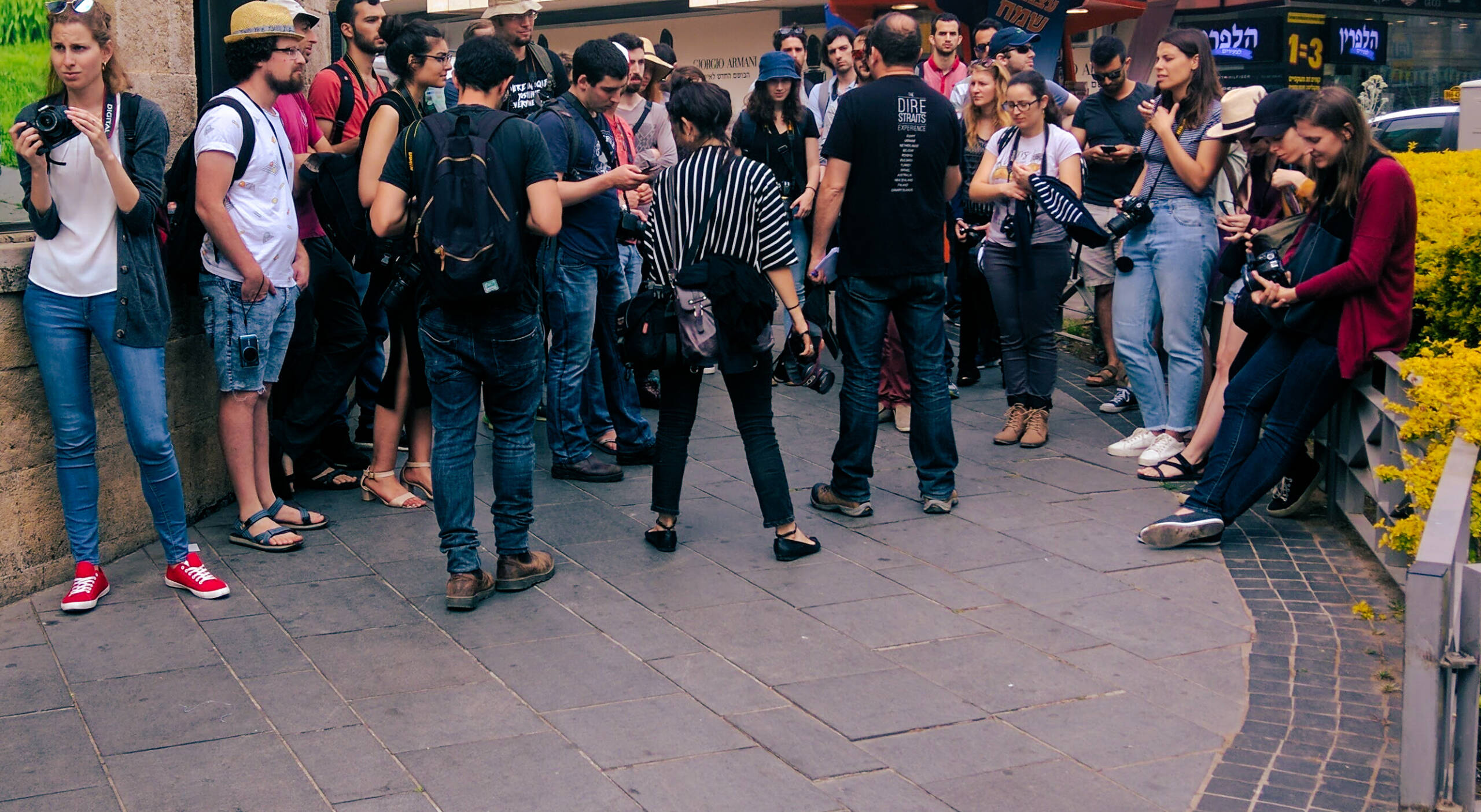
Nobody paid for that. Which is the entire reason photo walks keep getting sponsored.
What a sponsor is actually buying
Strip out the hobby framing and a photo walk is a content production event with volunteer crew. The organizer supplies a route and a time. The attendees supply equipment, labour, and distribution, because most of them will post what they shoot within forty eight hours to accounts that reach people with the same interest.
The buyer is purchasing three things. A route that passes their asset, whether that is a store, a hotel, a new district, a restored building, or a whole city. A cohort of people whose default behaviour is to photograph what they walk past and publish it. And a moment of physical product contact, if the sponsor has product worth putting in hands.
That last one is why camera manufacturers and rental houses fund these more than anyone else. A loaner desk at the meeting point puts a body and a lens in the hands of someone who has spent six months reading about it. Three hours later they hand it back having made pictures they like with it. No ad unit does that.
The arithmetic
Model it rather than guessing at it. Twenty attendees, each publishing five frames somewhere, is a hundred pieces of original imagery. Against a cost base of a route, a permit if the location needs one, a guide for three hours, and coffee. If the sponsor supplies loaner gear it is already in the demo fleet.
Run the cost per published asset and it lands somewhere no agency retainer can reach. Run cost per attendee and it looks like a small dinner. This is the number that keeps the format alive in tourism boards and property marketing budgets, where the alternative is commissioning a shoot and paying licensing on twelve images.
The catch is that the hundred assets are uncontrolled, uncaptioned, mostly unlicensed to you, and shot to twenty different tastes. More on that below.
Who runs them and what each one wants
Camera brands and retailers want trial. The walk is a demo with a three hour try-before-you-buy window and a peer group applying gentle pressure.
Tourism boards and city marketing want geotagged imagery of places their own photo library does not cover, made by people who live there and shot in ordinary light rather than golden hour brochure conditions.
Property developers and mall operators want a new district photographed while it still looks new, and they want it to look inhabited. Twenty photographers walking through an empty plaza solve the emptiness problem while documenting it.
Brands with a physical venue want the venue to appear as scenery rather than as an advertisement. A coffee chain that hosts the meeting point appears in the first frame of everyone’s set without asking anyone to shoot it.
Where it fails
Attribution is close to impossible. You will never cleanly connect a walk to a sale, which means the line item survives only as long as the person who championed it stays in the job.
Audience mismatch is the bigger problem. Photographers are enthusiasts about equipment and indifferent to almost everything else. A fashion retailer sponsoring a walk gets pictures of the street outside its store and buyers who were never in market. The format converts well for anyone selling to photographers and poorly for everyone else.
Then there is the output itself. Uncommissioned photographers shoot what interests them. Send twenty of them past your new development and you will get doorways, hands, reflections, a dog, and one wide shot of the building from an angle your architect hates. The images are of the walk, not of the client.
And usage rights. If nobody raised licensing at the meeting point, you have a hundred images you cannot legally use in a campaign, made by people who would probably have said yes if asked.
How to structure one that works
Brief the route, not the pictures. Tell people where they are going and what is unusual about each stop. Do not hand out a shot list, because you will get compliance instead of enthusiasm and the results will look like it.
Settle rights at the start, in one paragraph, in exchange for something concrete. Print credits, a gallery wall, entry into a judged selection with a real prize. People will license generously when the ask is upfront and the return is visible.
Put product in hands if you have product. If you do not, put access in hands instead: the roof, the closed floor, the site before opening. Access is the version of this that a location owner can supply and nobody else can.
Give it a hashtag and a deadline. The tag makes the output findable, the deadline makes it exist. Without a date, half the group never posts.
Program the follow up before the walk, not after. A gallery post, a shortlist, a print run, a second walk. One walk is an afternoon. Four walks is a channel.
The gear in this frame cost more than the activation did.